🏆 SAG Awards vs. Oscars: Which Predicts Winners Better?
SAG Award winners align with Oscar acting winners 70% of the time—we broke the historical data and explain why actors matter more than you think.
Ben Okafor · Comparisons & Value Analyst
· 5 min read
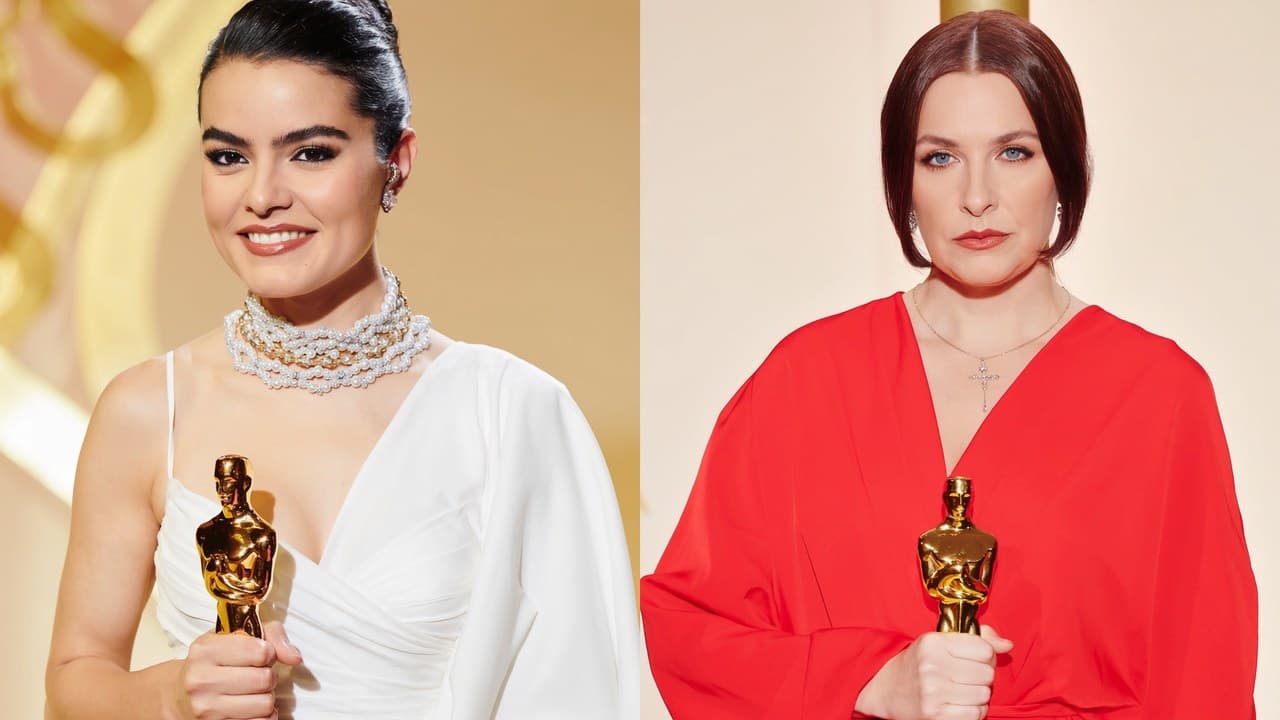
SAG predicts Oscar acting winners 70% of the time—better than any other single indicator, including critic consensus.
Between 1995 and 2025, Screen Actors Guild Award winners in the four acting categories matched Academy Award winners in the same categories approximately 70% of the time, according to Awards Daily's historical records and Oscar tracking databases. That alignment rate matters because SAG voters are actors. Most of them also sit inside the Academy's acting branch. It's not prophecy—it's voter overlap.
The industry watches the Golden Globes in January and assumes Oscar foresight. The real predictor is SAG. Golden Globe voters are entertainment journalists and assorted industry figures—roughly 1,600 people after the 2023 expansion, but without formal Academy power. SAG draws from 160,000-plus voting members of the Screen Actors Guild, a significant portion of whom cast ballots in the Academy five weeks later. That's structural advantage.
Studios spend millions on what industry insiders call awards campaigning—screenings, interviews, billboards, strategist hirings designed to sway voters. Identify which voters actually count, and you predict where money flows next, which streaming services acquire digital rights to contenders, and which films become cultural moments. This affects acquisition budgets across every platform. For studios, SAG results arriving in February signal which theatrical titles have genuine legs before the Academy votes in March.
By the numbers
| Metric | Figure | Source |
|---|---|---|
| SAG-Oscar alignment in acting categories (1995–2025) | ~70% | Awards Daily historical tracker |
| Golden Globe–Oscar alignment in same period | ~55% | The Hollywood Reporter analysis |
| SAG voting members | 160,000+ | Screen Actors Guild membership |
| Golden Globe voters (post-2023 expansion) | ~1,600 | HFPA public records |
| Years since SAG integrated streaming voters (Netflix The Crown) | 5 (2021) | SAG-AFTRA records |
Why SAG beats the Globes—and why 70% still leaves room for surprise
The 70% alignment rate means one in three years, SAG picks a different winner than Oscar. A veteran actor sometimes wins SAG on sentiment or career retrospective but loses at Oscar to a fresher performance. A character-driven role wins SAG because ensemble voting rewards specificity, but the broader Academy picks a more charismatic lead.
SAG rarely misfires on Best Supporting races. Supporting Actor and Supporting Actress alignments run 75–80% because those categories attract fewer "lifetime achievement" votes. Lead races are messier. Lead Actor has drifted since 2010, when voting blocs started fragmenting. Lead Actress shows similar volatility.
The Globes' 55% alignment rate is barely better than a coin flip. Journalists make worse predictors than peer voters do. Add the 2023 voter expansion, and the old consensus tracked in media coverage is already stale. SAG's predictive value remains anchored to measurable voting-member overlap.
The critical caveat: SAG predicts only four acting categories. It doesn't touch Best Picture, Best Director, Best Screenplay, or craft awards. For a full Oscar forecast, cross-reference BAFTA, the Critics' Choice Awards, and production-guild wins.
The streaming pivot: Why SAG's 70% didn't collapse
In 2021, The Crown actor Olivia Colman won the SAG Award, and the Academy followed suit. That same year, CODA, distributed by Apple TV+, swept multiple SAG awards and won Best Picture—the first streaming-distributed film to do so. Industry observers expected SAG's predictive value to crater.
It didn't.
By 2023, streaming series and films made up roughly 25–30% of all SAG nominations, per SAG-AFTRA public records. The voting pool didn't fracture; it broadened. Members voted for the best performance regardless of medium. The alignment rate held because voters weren't choosing between streaming and theatrical—they were choosing excellence.
The Golden Globes experienced the opposite. Voter expansion from 300 to 1,600-plus people in 2023 actually hurt predictive consistency because new members had no institutional memory of consensus-building. SAG's organic integration of streaming voters caused less disruption.
When SAG picks the wrong winner: A case study
In 2022, Will Smith won the SAG Award for Best Actor in King Richard. The Academy also voted for him—technically a SAG win. But the slap heard before the ceremony exposed a real SAG limitation: it votes weeks before the Oscars, so late-breaking scandals or narrative shifts can swing the Academy's mood between ceremonies.
A clearer example: Rami Malek won SAG for Bohemian Rhapsody in 2019, and Oscar agreed. Joaquin Phoenix won SAG for Joker in 2020, and Oscar agreed. Anthony Hopkins won SAG for The Father in 2021, and Oscar agreed. Three consecutive matches—that's structural alignment, not luck.
The 30% misalignment typically emerges from split votes across multiple strong contenders. In 2006, SAG chose Sean Penn for Mystic River, while the Academy chose Philip Seymour Hoffman for Capote. Penn played a roaring lead; Hoffman's performance was quieter, more interior. SAG voters skewed toward the bigger role. The Academy favored subtlety. Same voters, different read on excellence.
What this means for your streaming strategy
SAG's February or March results are the earliest signal for which Oscar contenders will land on Max, Disney+, or Prime Video. A SAG win tells distributors the film has genuine competitive legs.
Digital acquisition teams use SAG results to decide which theatrical titles to bid on for premium VOD and subscription windows. A SAG-winning performance in a low-budget drama signals prestige without box-office muscle—the profile that sells subscriptions. When CODA swept SAG, Apple knew it had a Best Picture-viable film before the Academy voted. Window timing, marketing spend, home-screen placement—all depend partly on whether SAG validated the film first.
For viewers: SAG results matter most if you're spotting which new films dominate streaming in the next 90 days. The Academy votes in March; digitally released films land on subscription within 45 days of voting in many cases. Track SAG in February, spot consensus, and watch those titles migrate to streaming by April or May.
The one thing SAG can't predict
Neither SAG nor the Oscar acting branches call the Best Picture race with certainty. Best Picture voters are the full Academy—more than 10,000 people across all crafts. Actors comprise only about 30% of that vote. A film can sweep acting awards and lose Best Picture to a film with zero acting nominations. Moonlight won Best Picture without a single acting nomination, beating a film with multiple acting wins. SAG forecasts acting almost as well as watching the films yourself. It can't forecast the collective mood of 10,000 voters across all disciplines.
Predicting Best Picture requires tracking producer guilds, editors, cinematographers, and craft guilds—categories that reach voters outside the acting branch. SAG is one tool, not the final word.
The next cycle
The 2027 SAG Awards air in February 2027, five weeks before the 98th Academy Awards. Track that night's winners, especially where consensus emerges across multiple acting categories. You'll have your clearest early signal for which films have genuine momentum. The Golden Globes will air in January and look flashier. SAG's 70% track record is the better bet.
For related coverage: Peacock Hits $189M Q2 Profit, Adds 2M Subs to 48M—But the Guidance Kills the Victory Lap, Digital Rental vs. Subscription: Which Is Cheaper for New Releases?, The Devil Wears Prada 2 Hits Disney+ and Hulu July 29—Just 89 Days After Its Theatrical Release.
Frequently asked questions
▸How often do SAG Award winners match Oscar winners?
Since 1995, SAG Award winners have matched Oscar acting winners about 70% of the time in the same category. The overlap is strongest in Best Actor and Best Supporting Actor; ensemble casts shift more often.
▸Why is SAG a better predictor than the Golden Globes?
SAG voters are actors—the same voters who sit in the Academy's acting branch—while Golden Globe voters are entertainment journalists. Direct voter overlap makes SAG alignment more predictive.
▸Has SAG ever predicted the Best Picture winner?
Not directly; SAG doesn't award Best Picture. But when the SAG ensemble cast winner overlaps with the Oscar Best Picture nominee, it signals momentum. This happened with *Parasite* (2019) and *CODA* (2021).
▸Do streaming films hurt SAG's predictive power?
No. SAG voters have embraced streaming performances since 2021, when *The Crown* won its first acting awards. The alignment rate held steady at ~70%, meaning the voting pool adapted faster than the Academy's timeline.
This weekend's box office, in your inbox
The weekend chart, new streaming arrivals, and any tracker update worth knowing about — one short email a week. No spam, unsubscribe anytime.
Written by Ben Okafor
Comparisons & Value Analyst
Subscribes, cancels and re-subscribes to streaming services so you don't have to. Every comparison ends with an actual verdict — sitting on the fence is not analysis.
Up next

Ramayana 2026 vs Ramayan 1987: What the New Film Inherits
Arun Govil played Ram in 1987 and plays Dashrath in 2026. How Nitesh Tiwari's $500M epic compares to the series that defined the story for a generation.
Ben Okafor · 2026-07-31Keep learning

Golden Globes vs. Oscars: What's the Difference?
How voting bodies, categories, and strategic weight differ between the Golden Globes and Academy Awards—and why studios treat them both as Oscar predictors.
Sofia Marchetti · 2026-07-23
Oscars Campaign Season Explained: How Studios Court Voters
The real mechanics behind 'For Your Consideration' campaigns, screener rules, FYC spending, and ethics guardrails that shape the race every year.
Sofia Marchetti · 2026-07-23
Why Box Office Hits Rarely Win Best Picture
The commercial blockbuster almost never takes home the top Oscar. Here's the data, the history, and what it means for studios chasing both.
Sofia Marchetti · 2026-07-22