⚖️ Ramayana 2026 vs Ramayan 1987: What the New Film Inherits
Arun Govil played Ram in 1987 and plays Dashrath in 2026. How Nitesh Tiwari's $500M epic compares to the series that defined the story for a generation.
Ben Okafor · Comparisons & Value Analyst
· 4 min read
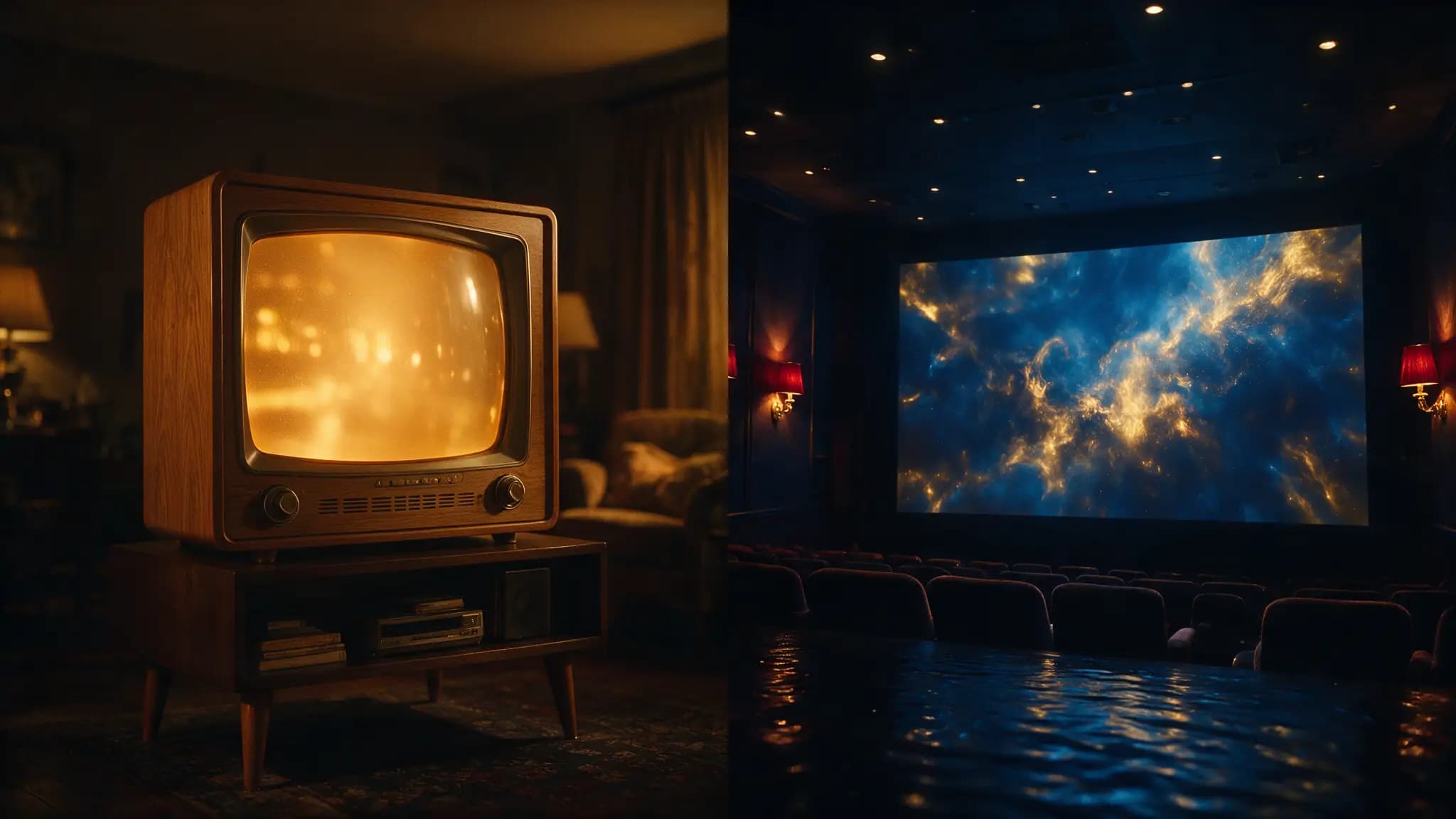
When Nitesh Tiwari cast Arun Govil as Dashrath, he was doing something more deliberate than filling a supporting role. Govil played Ram in Ramanand Sagar's 1987 television series — the version that, for hundreds of millions of Indians, is not an adaptation of the Ramayana but simply the Ramayana. Putting him on screen as Ram's father is a blessing being passed forward, and the trailer makes sure you see it.
That gesture invites the comparison. So let's make it properly.
By the numbers
| Ramayan (1987) | Ramayana (2026) | |
|---|---|---|
| Format | TV series, dozens of episodes | Two theatrical films |
| Creator | Ramanand Sagar | Nitesh Tiwari |
| Ram | Arun Govil | Ranbir Kapoor |
| Sita | Dipika Chikhlia | Sai Pallavi |
| Ravana | Arvind Trivedi | Yash |
| Budget | Television-scale | ~$500M (both parts) |
| Visual approach | Tableau, devotional | Photoreal VFX, IMAX |
| Music | Devotional score | Hans Zimmer & A.R. Rahman |
| Reach | National broadcast | Worldwide, Sony international |
What the 1987 series actually did
It's easy to look back at Sagar's Ramayan and see only the limitations — the static staging, the visible sets, the effects that a modern audience finds quaint. That reading misses why it worked.
The series was built on a devotional grammar, not a dramatic one. Characters hold poses. The camera lingers. Scenes resolve into compositions that look like temple imagery, because that's what the audience was being invited into — an act of darshan, not a story beat. Streets emptied when it aired. That isn't a fact about production values; it's a fact about the register it chose.
Its casting became definitive in a way few adaptations ever manage. Govil, Dipika Chikhlia and Arvind Trivedi didn't just play those roles — for a generation they became the visual default. That's the standard the 2026 film is walking into.
What the 2026 film is doing differently
Spectacle over tableau. DNEG is building Lanka, the vanara army and Kumbhakarna as photoreal environments and creatures. The 1987 series suggested scale; this one intends to render it. Whether it succeeds is the open question after a trailer whose creature work drew criticism — covered in the VFX debate.
Compression. Dozens of episodes become two films. Enormous amounts of the epic — subplots, minor characters, digressions — have to go. A television serial can afford to wander; a two-part theatrical release cannot.
Interpretation. Reports around the trailer indicate Ranbir Kapoor's Ram is framed as a dual Vishnu avatar, which would be a meaningfully more expansive reading than the 1987 series attempted. Sagar's version played Ram as a figure of settled divinity. This one appears to be reaching for something more layered — and that's exactly where adaptations of sacred material generate the most heat.
Global address. Sony distributing internationally, a worldwide IMAX rollout, and Hans Zimmer sharing the score with A.R. Rahman all point at an audience with no prior relationship to the material. The 1987 series never had to explain itself to anyone. This one does.
Where the new film is at a disadvantage
It inherits an impossible comparison. Every viewer over 35 in India has a Ram in their head, and it is Arun Govil's. Ranbir Kapoor is not being judged against a character; he's being judged against a memory. The early criticism of his dialogue delivery is partly a performance critique and partly that.
Photorealism is less forgiving than suggestion. The 1987 series' effects were obviously artificial, and audiences accepted them because the register was devotional — nobody expected literalism. Once you commit to photoreal, every shot either convinces or fails. There's no middle ground, and the trailer found that out.
Devotion doesn't scale with budget. The thing that made the 1987 series land was tone, not spend. A $500M film can buy Lanka. It cannot buy the feeling of a country stopping to watch.
Where the new film has the advantage
It can actually stage the war. The Lanka war is the epic's climax and the 1987 series could only gesture at it. Part 2 in Diwali 2027 is where this production justifies its existence — if the effects land.
Yash's Ravana has room the 1987 version didn't. Arvind Trivedi's Ravana is fondly remembered but was written within the constraints of a devotional serial, where the antagonist exists mainly to be defeated. Yash's is already the trailer's most praised element, and a modern two-part structure gives the character genuine screen time.
It travels. The 1987 series was a national phenomenon. This is built to be a global one. Whether that ambition is realised is unproven — but it's an ambition the earlier version never had.
The verdict
These are not competing versions of the same thing, and treating them as a contest misreads both.
The 1987 series is a devotional artefact — its power comes from tone, familiarity and the moment it arrived in. Nothing made in 2026 can replicate that, and a $500M budget is irrelevant to it.
The 2026 film is a spectacle bet: that the Ramayana can be rendered at Hollywood scale and exported worldwide without losing what makes it matter at home. The Govil casting is Tiwari acknowledging exactly this — he isn't pretending the earlier version doesn't exist, he's asking for its blessing.
If you grew up with the 1987 series, the new film will not replace it, and it isn't trying to. If you're coming to the story fresh, the 2026 version is being built specifically for you — start at the Ramayana hub, then see where to watch and the full cast.
Frequently asked questions
▸Is Arun Govil in the 2026 Ramayana?
Yes — he plays Dashrath, Ram's father. Govil played Ram himself in Ramanand Sagar's 1987 television series, which makes the casting an explicit handoff between the two adaptations.
▸Why is the 1987 Ramayan so significant?
It is the version most Indian households encountered first, and for a generation it effectively *is* the Ramayana. Its imagery, casting and tone set the default expectation that every later adaptation is measured against.
▸Is the 2026 film a remake of the 1987 series?
No. Both adapt the same source epic, but the 1987 series ran for dozens of episodes with a devotional, tableau-like visual grammar. The 2026 film is a two-part theatrical spectacle built for IMAX with Hollywood-scale VFX.
▸Which version is more faithful?
The 1987 series is closer in tone and pacing to traditional devotional retellings. The 2026 film appears to take more interpretive liberty — reports point to Ranbir Kapoor's Ram being framed as a dual Vishnu avatar.
This weekend's box office, in your inbox
The weekend chart, new streaming arrivals, and any tracker update worth knowing about — one short email a week. No spam, unsubscribe anytime.
Written by Ben Okafor
Comparisons & Value Analyst
Subscribes, cancels and re-subscribes to streaming services so you don't have to. Every comparison ends with an actual verdict — sitting on the fence is not analysis.
Up next

SAG Awards vs. Oscars: Which Predicts Winners Better?
SAG Award winners align with Oscar acting winners 70% of the time—we broke the historical data and explain why actors matter more than you think.
Ben Okafor · 2026-07-24Keep learning

Ramayana Cast 2026: Full List of Who Plays Who
Every confirmed role in Nitesh Tiwari's Ramayana — Ranbir Kapoor as Ram, Yash as Ravana, Sunny Deol as Hanuman — plus the casting choices drawing debate.
Sofia Marchetti · 2026-07-31Ramayana Trailer Breakdown: Every Reveal, Shot by Shot
The four-minute Ramayana trailer dropped at Brahma Muhurat and hit 10M views in 9 hours. What every major reveal tells us about how Part 1 is structured.
Dana Whitfield · 2026-07-31
Ramayana Release Date & Where to Watch: Diwali 2026 Guide
Ramayana Part 1 lands 8 November 2026 with a worldwide IMAX rollout. Dates, languages, formats, international release and the streaming window to expect.
Sofia Marchetti · 2026-07-31
Namit Malhotra: From a Mumbai Garage to Eight Oscars
The producer betting $500M on Ramayana built DNEG from a one-room Mumbai setup into the VFX house behind Inception, Interstellar and Dune. His track record, examined.
Harper Lane · 2026-07-31