🏎️ IFC's 'Motor City' Idles to $1.6M Amid July Nolan Dominance
Alan Ritchson's dialogue-free noir opens soft against The Odyssey, signaling IFC's limited appeal in a crowded marketplace.
Dana Whitfield · News Editor
· 5 min read
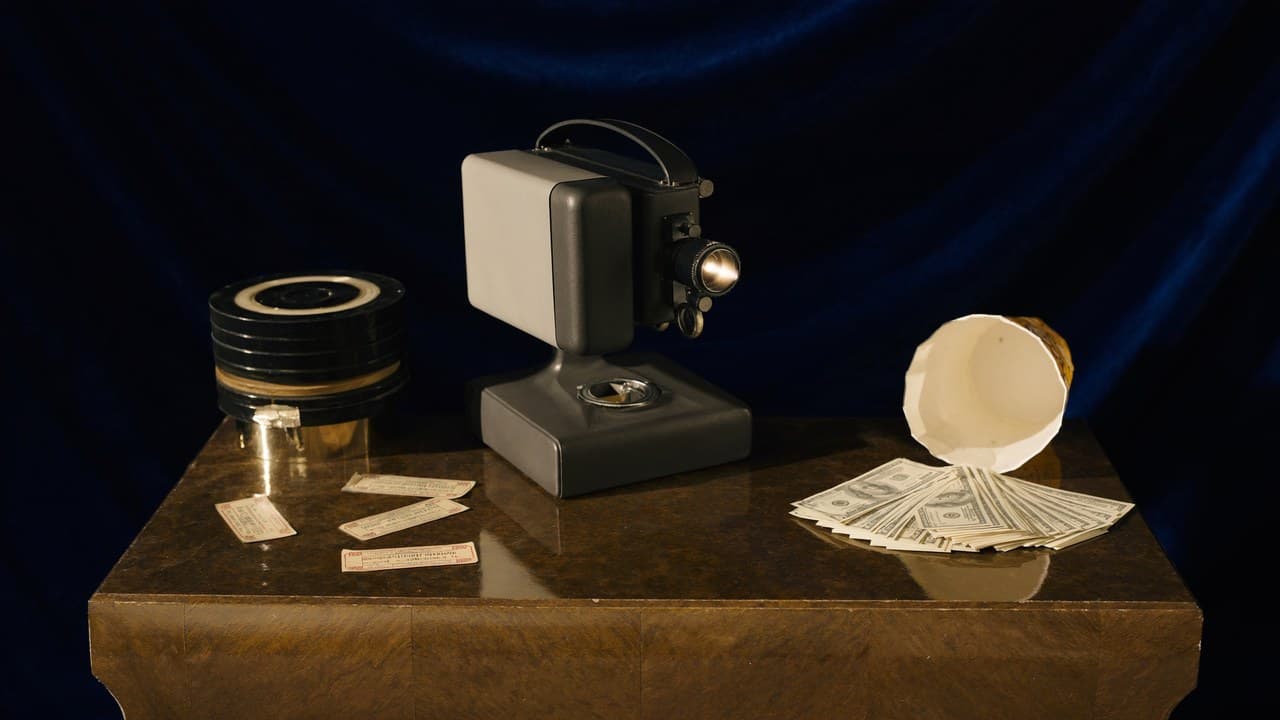
IFC's Motor City pulled in $1.625 million at 1,600 screens in its opening weekend, a soft debut for director Potsy Ponciroli's gritty, R-rated dialogue-less crime noir that exposed the brutal arithmetic of July's blockbuster calendar.
The film earned $850K on Friday (including previews) and dropped to $471K on Saturday—a signal that even star power and a formal gimmick can't crack crowded markets. The Odyssey held at $87 million in its second weekend, vacuuming screens and mindshare. No major studio dared open wide against either film. The marketplace had no new studio releases this weekend, and when Spider-Man arrives next week, it will have been nine weeks since the last major action picture.
The Math Never Favored This Release
Motor City's $1.625 million opening breaks down to $1,016 per screen—a number that tells the real story. Late Night With the Devil managed $1,273 per screen across 2,200 theaters despite a $3M budget. Clown in a Cornfield hit $1,440 per screen on just 2,500 locations. IFC couldn't drive specialized audiences the way those films did, and that gap widens when you account for the $30 million production budget sitting behind Motor City.
The preview math compounds the problem. Motor City's $475,000 Friday preview haul fell between Late Night With the Devil ($317K previews, $2.8M opening) and Clown in a Cornfield ($600K previews, $3.6M opening). In isolation, a $475K preview number looks respectable. But those comp films carried budgets under $4 million. When your movie cost ten times as much, a "respectable" specialty number becomes a structural disaster.
The production needed at least $5–6 million from its core audience to justify theatrical release as anything other than a marketing channel for downstream revenue. By that math, Motor City missed its floor by roughly 75%.
Why this matters: Motor City's collapse reveals the widening chasm between four-quadrant tentpoles and specialty fare. With summer audiences increasingly split between superhero/spectacle and prestige limited tracks, a $30 million dialogue-free thriller occupies neither—and can't break through the noise that The Odyssey generates. The Nolan film spent its second weekend at 3,900+ theaters. Motor City couldn't book half those locations. That's not a commentary on screen count; that's a commentary on demand.
The dialogue-free conceit proved both hook and limitation. The screenplay earned a spot on the Black List in the late 2000s, bounced around Hollywood for a decade and a half, but never attracted a studio brave enough to execute it. For good reason. Motor City is a John Wick-esque revenge thriller told without dialogue—but execution matters more than concept. The film holds 64% audience score and 66% fresh critics score on Rotten Tomatoes, mixed enough to flatten word-of-mouth. That split score suggests the film found an audience that appreciated the formal experiment while alienating mainstream viewers who expected conventional narrative momentum.
Why Studios Avoided This Corridor
The silent-action market has a narrow ceiling. John Woo's 2023 Silent Night, which used similar sound-design-first mechanics, opened to $3.2 million on 2,400 screens and took five weekends to gross $11M domestically. That film had the advantage of opening in January, a clearer window for specialized releases, and it still couldn't build legs. When you position a dialogue-free action film in July, you're competing for screens and audiences against superhero franchises and spectacle films designed to fill IMAX and Dolby auditoriums. A noir thriller—no matter how formally disciplined—can't offer what those films promise.
I suspect IFC greenlit this at $30 million with overseas presales covering half the cost, which explains why the company proceeded despite obvious commercial headwinds. That's a standard indie strategy: sell foreign rights, take the theatrical loss domestically as marketing for streaming and ancillary, recover on the backend. But that doesn't change opening weekend reality. The number stayed small because audiences didn't show up.
The cast couldn't overcome the structural problem. No dialogue means limited character development, which in ensemble action means reduced appeal to casual audiences. Ritchson, Woodley, Ben Foster, Pablo Schreiber, and Lionel Boyce had to convey character through visuals alone. Critics praised Ritchson's physicality—his stoic presence and precise physical work—but flagged the broader issue: the lack of conversation forced the star-studded cast into exaggerated overacting, bridged by 1970s needle drops. That's a strategic choice that works for a 90-minute formal experiment. It fails for a film asking audiences to invest $15 in a revenge narrative that runs 108 minutes.
| Metric | Motor City | Late Night With the Devil | Clown in a Cornfield |
|---|---|---|---|
| Previews | $475K | $317K | $600K |
| Screen Count | 1,600 | ~2,200 | ~2,500 |
| Opening Weekend | $1.625M | $2.8M | $3.6M |
| Per-Screen Average | $1,016 | $1,273 | $1,440 |
| Production Budget | $30M | ~$3M | ~$1.5M |
The Precedent Problem
Dialogue-free thrillers have never sustained theatrical momentum, even when executed by A-list directors. The format works in short form—a 12-minute short film or a 40-minute sequence—because it maintains visual novelty. Stretched across a feature, it demands that every action beat carry narrative weight, and most filmmakers (and audiences) aren't trained for that discipline. Ponciroli's execution, by most accounts, wasn't visually disciplined enough. Long stretches relied on Ritchson's performance alone, without dialogue to scaffold motivation or character arc. That's a choice that reads as innovation in a festival or art-house context. It reads as emptiness in a commercial thriller.
The script bounced around Hollywood for fifteen years because studios understood the commercial truth: dialogue-free narratives are art-house experiments, not four-quadrant plays. A $30 million budget changes that math entirely. You're not funding a passion project or a genre showcase; you're funding a film that needs to recoup that spend. Hollywood's hesitation wasn't artistic; it was economic.
What Happens Next
IFC has produced theatrical acquisitions with stronger legs. This one needed theatrical buzz, festival momentum, or critic consensus—and it achieved none of those. The film will likely recoup costs through platform expansions, streaming licensing, and ancillary markets, but this weekend wasn't the vindication IFC hoped for. When Spider-Man arrives next week, tracking projects a $200 million opening. August belongs to the franchises, and Motor City's theatrical window has effectively closed.
The real number to watch is how quickly the film moves to PVOD and which streaming service picks it up domestically. If Motor City lands on a prestige platform within four weeks, IFC found its real audience. If it takes longer, the entire release was a miscalculation on platform strategy.
Frequently asked questions
▸Why did Motor City underperform relative to its budget?
A $30M indie action film on 1,600 screens faces structural headwinds: [The Odyssey's second weekend](/trackers/box-office-weekend-standings-late-july-2026) commanded 3,900+ theaters with $87M, and major studios avoided the corridor entirely. Limited films like Motor City depend on specialized audiences—action fans, film festival loyalists—who represent a fraction of summer ticket-buyers.
▸How does Motor City's dialogue-free approach compare to other recent experiments?
The film employs similar strategies to John Woo's 2023 'Silent Night,' relying on sound design and 1970s needle drops rather than exposition. Unlike Woo's approach, however, reviewers found director Potsy Ponciroli's execution less visually disciplined, leaving long stretches dependent on performance alone.
▸What did critics say about the cast's work?
Reviewers were split. Ritchson's physical presence and stoic expression drew consistent praise, but the lack of dialogue forced supporting players—Woodley, Foster, Schreiber—into exaggerated emoting. The absence of exposition meant character motivation often relied on pure action beats, not dialogue.
▸What's the per-screen math on Motor City's opening?
At $1.625 million across 1,600 screens, Motor City averaged $1,016 per location. For context, Late Night With the Devil cleared $1,273 per screen despite its 2,200-theater footprint. The gap suggests IFC couldn't drive demand even among specialized exhibitors who booked the film.
This weekend's box office, in your inbox
The weekend chart, new streaming arrivals, and any tracker update worth knowing about — one short email a week. No spam, unsubscribe anytime.
Written by Dana Whitfield
News Editor
Covers studio announcements, casting confirmations and release-calendar moves. Reads the full press release so you don't have to, and flags the parts the marketing copy glosses over.
Up next
Ramayana Trailer Breakdown: Every Reveal, Shot by Shot
The four-minute Ramayana trailer dropped at Brahma Muhurat and hit 10M views in 9 hours. What every major reveal tells us about how Part 1 is structured.
Dana Whitfield · 2026-07-31Keep learning
The Odyssey Holds at $84.5M Second Weekend — Nolan's Format Play Rewrites the Playbook
The Odyssey holds 32%, Moana drops 56%, Toy Story nears $1B. Late July chart breakdown with format analysis other outlets ignore.
Elliot Kang · 2026-07-25
Disney's Live-Action Moana Drowns in July Traffic, Tracking Below All Previous Remake Benchmarks
Live-action Moana opens to $43M domestic, $95M global—shortest turnaround and softest live-action remake debut ever, squeezed between Toy Story 5 and The Odyssey.
Dana Whitfield · 2026-07-25
The Odyssey Sets Christopher Nolan's Best Tuesday Ever at $21.4M
Nolan's The Odyssey posts $21.4M Tuesday, crushing The Dark Knight's $20.8M from 2008. Format-exclusive holds fuel second-weekend momentum.
Elliot Kang · 2026-07-26