📺 Apple TV+ vs. Paramount+: Which Is Worth It?
Paramount+ Essential at $8.99 beats Apple's flat $9.99 for most households, and the ad-free math flips it back. Every price, both catalogs, one verdict.
Ben Okafor · Comparisons & Value Analyst
· Updated · 8 min read
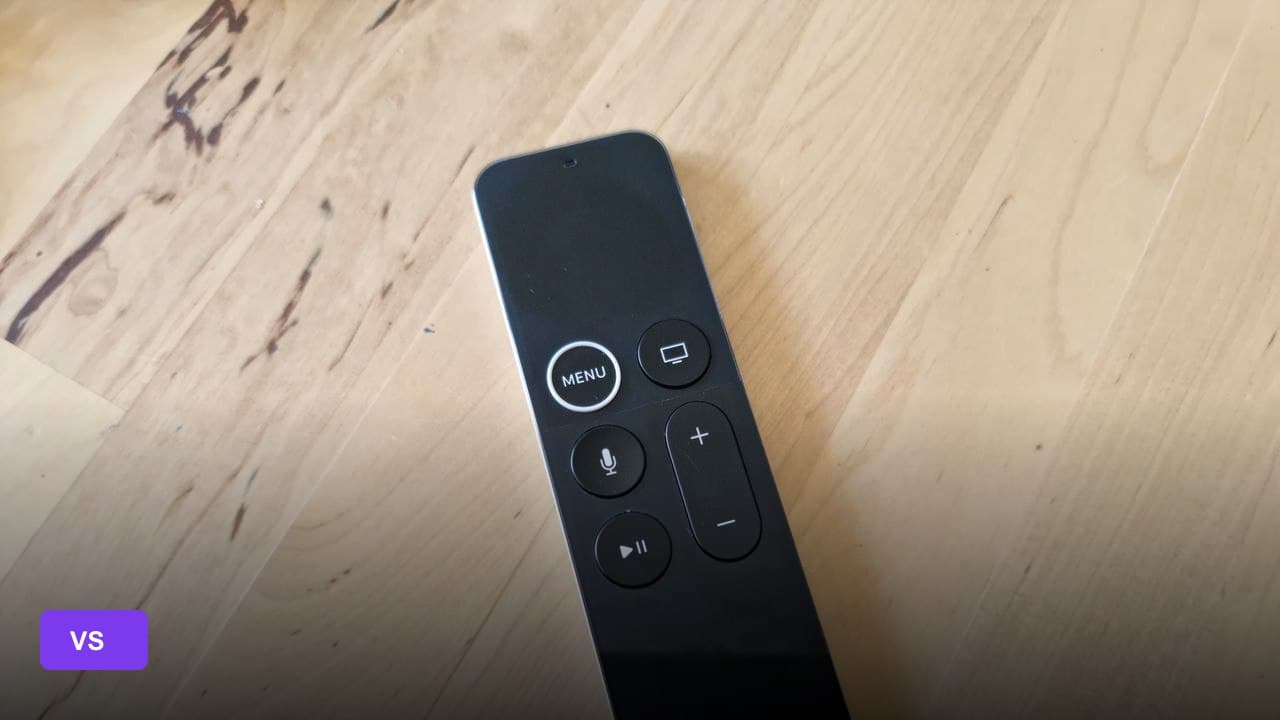
Paramount+ Essential, $8.99 a month. That's my pick for most households, and it wasn't close: the cheaper service in this matchup is also the one carrying the Paramount, MTV and Nickelodeon vaults plus day-and-date theatrical releases from Paramount Pictures. Apple TV+ charges $9.99 for a single shelf of originals. A gorgeous shelf. One shelf.
Bottom line: Paramount+ Essential at $8.99/month is the buy for anyone who can sit through ad breaks. Anyone who can't gets the inverted answer: Apple TV+ at $9.99 undercuts ad-free Paramount+ Premium ($13.99) by $4.00 a month, $48.00 a year, and brings the stronger prestige slate with it.
Apple's side of the ledger, granted in one sentence: no service near its size wins as much hardware per title, and CODA made it the first streamer ever to take Best Picture, back in 2022. Trophies are lovely. They don't fill a Tuesday night.
What does each plan cost, per month and per day?
| Plan | Ads | Monthly | Annual (x12) | Per day (annual ÷ 365) |
|---|---|---|---|---|
| Apple TV+ (only tier) | None | $9.99 | $119.88 | 33¢ |
| Paramount+ Essential | Yes | $8.99 | $107.88 | 30¢ |
| Paramount+ Premium (includes Showtime) | None | $13.99 | $167.88 | 46¢ |
Data effective July 19, 2026. The full market grid, every service and every tier, lives in our streaming price comparison.
The headline $1.00 gap is a decoy. $9.99 against $8.99 works out to $12.00 a year, roughly one large popcorn, and nobody should choose a service over it. The comparison that decides real money is ad-free against ad-free: Apple asks $9.99, Paramount wants $13.99, and that $4.00 spread is a 40% surcharge on Apple's price ($4.00 over $9.99) for the identical promise of television without interruption.
Forty percent, for the same silence.
Paramount's column already includes its January 2026 price increase, and the word "again" in that headline is doing honest work; this is a company with a habit. Apple's number has never moved. Look across the market and Netflix, Max and Disney+ all run the same two-and-three-rung ladder at higher altitudes, which leaves Apple as the only major streamer still selling exactly one number with no asterisk under it.
The ladder itself is the tell. Essential exists to be the price in the advertisement, held under nine dollars so the service reads as cheap at the exact moment a shopper is deciding. Premium exists to collect from the reflex buyer, the person who ticks the ad-free box on principle without ever pricing the principle. Supermarkets have run this play for a century. Streaming found it late and fell in love.
Why does Apple sell exactly one tier?
Because Apple TV+ answers to a hardware company, and it prices accordingly. The service's real job is making an iPhone or an Apple TV box feel more complete, so the streaming line never has to carry the company, and $9.99 can sit frozen while every rival ratchets upward. No mid-roll ads at any price is brand policy that happens to look like a pricing page: a premium hardware brand will not run commercials next to its own logo, so the question of an ad tier never even reaches the spreadsheet.
Paramount+ prices like the broadcaster it grew out of. A cheap, ad-subsidized front door, then a toll to escape the commercials. The toll is $5.00 a month ($13.99 minus $8.99), a 55.6% jump on the Essential base ($5.00 over $8.99), or $60.00 across a year.
In fairness, that $5.00 buys more than silence, because Premium folds in Showtime programming, and that muddies the read. If Showtime series are the reason for subscribing, $13.99 has internal logic. Anyone who simply hates ads is tipping the company 55.6% for permission to ignore its own sponsors, while Apple sells the same permission for $9.99 flat.
Two pieces of arithmetic Paramount would rather not see printed.
First, the upgrade is a button, so treat it like one. Say Showtime holds a subscriber's attention half the year: six Premium months plus six Essential months total $137.88 (6 × $13.99 + 6 × $8.99), against $167.88 for a full Premium year. That's a $30.00 refund for pressing a toggle twice.
Second, the stranger sum. Apple TV+ plus Paramount+ Essential together run $18.98 a month, just $4.99 more than Premium alone. For a fiver, that's Apple's entire catalog stacked on top of the Paramount library. Five dollars for a second whole service is the strongest anti-Premium argument on this page, and Paramount published the prices that make it.
What are you actually getting?
| Apple TV+ | Paramount+ | |
|---|---|---|
| Ad-supported tier | Not available | $8.99 Essential |
| Ad-free price | $9.99, the only price | $13.99 Premium |
| Catalog | Small, exclusively Apple originals | Deep Paramount, MTV and Nickelodeon library |
| Showtime content | No | Yes, on Premium |
| New theatrical films | No studio pipeline | Day-and-date Paramount Pictures releases |
| Last price move | None; holding | Raised January 2026 |
Data effective July 19, 2026.
Apple TV+ is a hotel minibar stocked by a Michelin chef. Every item in it is excellent, none of it is dinner, and you will run out. The catalog is almost entirely Apple-produced originals, small enough that a determined viewer could clear the worthwhile titles in one season of evenings. I mean that as praise for the batting average and a complaint about the number of at-bats.
Paramount+ feeds a household on rotation. Nickelodeon covers the kids' hours while the Paramount and MTV vaults cover the nostalgia hours; Showtime handles prestige for anyone paying the toll. The quietly decisive row in that table is the theatrical pipeline: Paramount Pictures releases arrive day-and-date, so a film tracked on our weekend box office chart can land on the TV while it's still in cinemas, which settles the watch-it-at-home question for one studio's entire slate.
Apple has no studio pipeline feeding it. Nothing arrives except what Apple makes.
Which service has the better originals?
Apple, walking away, partly because originals are the only sport it plays. A catalog this small needs every release to headline, so the money concentrates on a few large swings a year instead of spreading across hundreds of shelf-fillers. CODA's Best Picture win at the 2022 Academy Awards, the first for any streaming service, is what that concentration looks like when it connects. (Our guide to how Oscar nominations actually work covers what a campaign like that involves.)
Paramount+ treats originals as franchise upkeep. Its shows extend IP the company already owns, built to keep current subscribers watching rather than to mint prestige from scratch. That's less glamorous in a press release and far more useful on a Wednesday, because a subscription justifies itself in hours watched, and hours are the one commodity a broad library manufactures cheaply.
Prestige-per-dollar: Apple, easily. Hours-per-dollar: Paramount+, by a distance that stops being funny.
Do you watch like a critic or like a household? Answer that honestly and this whole page collapses into one row of the pricing table.
Who should actually buy which?
A household with kids: Essential, no deliberation required, because Nickelodeon alone carries more child-hours than Apple's full catalog and the ads bother children exactly none.
A film-first viewer who bought tickets to Paramount releases this year: Essential again. The day-and-date pipeline quietly returns part of that ticket money as streaming access that would otherwise take months to arrive.
An ad-allergic viewer with no Showtime attachment: Apple, and don't overthink it. $9.99 is the cheapest ad-free number on this page, $48.00 a year under Premium.
A Showtime devotee: Premium, held strictly to the months a season is airing. The toggle strategy above prices that loyalty at $137.88 instead of $167.88.
Nobody on that list landed on year-round Premium. That's the review.
Our verdict
Paramount+ Essential at $8.99, restated with the year attached: $107.88 buys the deepest catalog in the matchup plus one studio's theatrical output on a conveyor, and at 30¢ a day the ad breaks are a toll worth paying.
Apple TV+ at $9.99 is the right second place, and the only pick when commercials are disqualifying. $119.88 for an ad-free year of streaming's best per-title batting average is fair money, honestly priced, from the one service that has never raised it.
The plan I'd talk most people out of is the reflex buy, Premium at $13.99. Unless Showtime is specifically the draw, that's $167.88 a year: $48.00 more than Apple's entire service, $60.00 more than Essential, and only $59.88 short of running Apple and Essential together for a full year ($227.76 at $18.98 a month). Set next to that last number, year-round Premium is hard to defend at all.
Buy Essential and pocket the difference.
What to watch next
Two numbers decide whether this verdict survives 2026. The first is Paramount's next move: Essential sits $1.00 under Apple's flat rate, the January increase already carried the word "again," and if Essential ever crosses $9.99 the value case narrows to catalog alone. The second is whether Apple blinks and adds an ad tier, which would delete the cleanest sentence on this page: one price, no ads, ever. Flat, untouched pricing is nearly extinct among the majors, and every quarter Apple's number holds still, it wins a little more of this comparison without commissioning a single new show.
Methodology
Prices come from each service's own pricing page as of July 19, 2026, cross-checked against the sourcing behind our full streaming price comparison. Catalog claims describe ownership and licensing structure, Apple's all-original model against Paramount Global's owned library, rather than title counts, which shift too often to print. CODA's Best Picture record is the 2022 Academy Awards result. Every derived figure on this page (annual totals, per-day rates, the $4.00, $4.99 and $5.00 spreads, the 40% and 55.6% surcharges, the $30.00 toggle saving) is arithmetic on the listed prices, with the working shown where it appears.
Photo: "Apple TV 4K (4th Gen) with Touch Remote Control" by Smart Home Perfected, licensed CC BY 2.0 via Wikimedia Commons.
Frequently asked questions
▸Which is cheaper, Apple TV+ or Paramount+?
Paramount+ Essential at $8.99/month undercuts Apple TV+'s flat $9.99 by $1.00. Compare ad-free to ad-free and it flips: Apple's $9.99 against Paramount+ Premium's $13.99.
▸Does Apple TV+ have an ad-supported tier?
No. Apple TV+ sells exactly one plan at $9.99/month, ad-free, with nothing above or below it. Its price has held while Paramount+ raised prices in January 2026.
▸Which service has a bigger content library?
Paramount+, by a distance: the Paramount, MTV, Nickelodeon and Showtime catalogs plus day-and-date Paramount Pictures theatrical releases, against Apple's small all-original shelf.
▸Which is better for prestige original content specifically?
Apple TV+. The slate is small and aimed squarely at awards season (CODA made Apple the first streamer to win Best Picture, in 2022), while Paramount+ spends on breadth and franchise IP.
This weekend's box office, in your inbox
The weekend chart, new streaming arrivals, and any tracker update worth knowing about — one short email a week. No spam, unsubscribe anytime.
Written by Ben Okafor
Comparisons & Value Analyst
Subscribes, cancels and re-subscribes to streaming services so you don't have to. Every comparison ends with an actual verdict — sitting on the fence is not analysis.
Up next

Ramayana 2026 vs Ramayan 1987: What the New Film Inherits
Arun Govil played Ram in 1987 and plays Dashrath in 2026. How Nitesh Tiwari's $500M epic compares to the series that defined the story for a generation.
Ben Okafor · 2026-07-31Keep learning
Every Streaming Service Price Compared (2026)
Every streaming plan price for 2026, exact to the cent: Netflix, Max, Disney+, Prime Video, Apple TV+, Paramount+, Peacock, plus the real cost of losing ads.
Sofia Marchetti · 2026-07-18
Paramount+ Raises Prices Again in 2026
Paramount+ Essential hit $8.99 and Premium $13.99 on January 15, 2026: a $1 monthly bump masking a 50% jump on Essential's annual plan, $59.99 to $89.99.
Dana Whitfield · 2026-07-18
Netflix vs. Max vs. Disney+: Which Is Worth It?
Netflix, Max and Disney+ priced per tier, per day and per screen. Rotation math saves $152.91 a year, and one pick wins outright, stated first.
Ben Okafor · 2026-07-18