📰 Judge Pauses Paramount's $111 Billion Warner Bros. Deal in 14-Day Freeze
A federal judge granted the states a temporary restraining order July 20, halting Paramount's $111B Warner Bros. deal. Injunction hearing set for Aug. 3.
Dana Whitfield · News Editor
· Updated · 11 min read
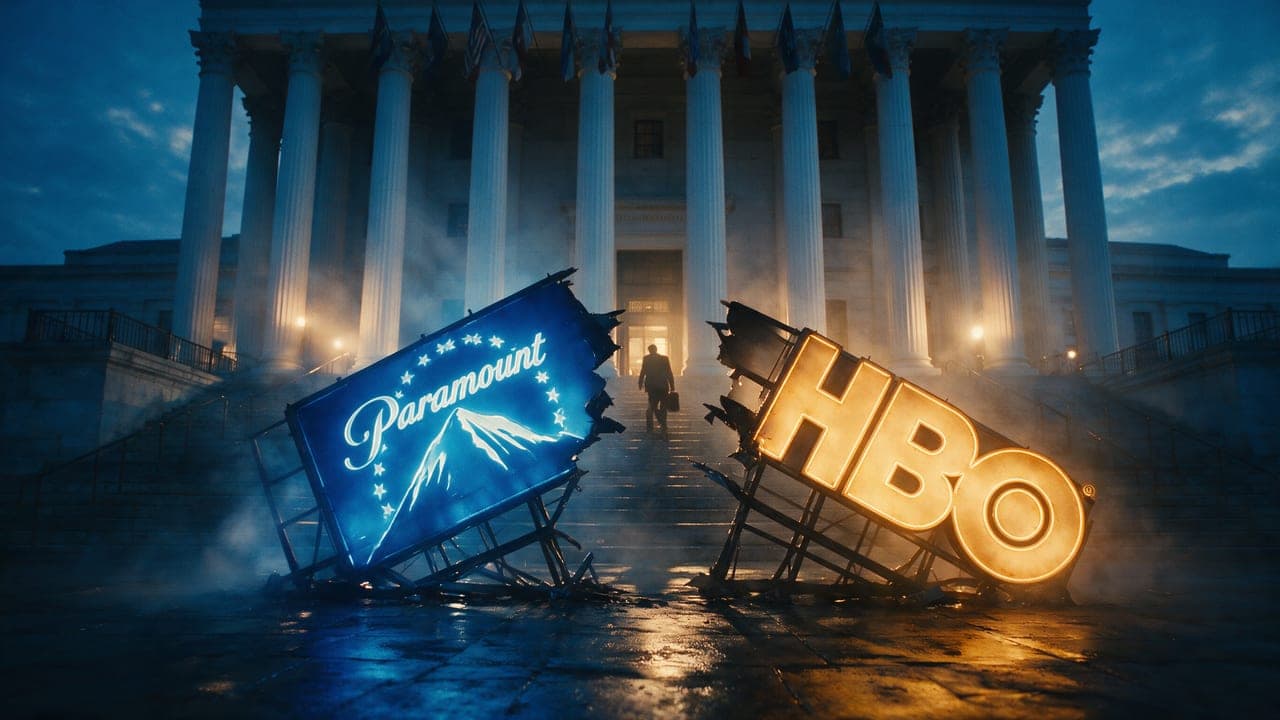
The states got their pause. On Monday, July 20, 2026, U.S. District Judge Araceli Martínez-Olguín granted a temporary restraining order that stops Paramount's $111 billion takeover of Warner Bros. Discovery from closing — a 14-day freeze that can be stretched to 28. Seven days after a July 17 hearing, the deal is legally parked.
The judge didn't split the difference. She found the states likely to win. "Because the Plaintiff States make a strong showing that the Transaction will substantially lessen competition in the wide-release theatrical distribution market, they demonstrate irreparable harm," her order reads, adding that "the combined firm resulting from the transaction will possess substantial market share" in that market. Her closing line is the one that should worry Paramount's deal team: "The balance of equities, combined with the public's vital interest in antitrust enforcement, therefore tips sharply in favor of the requested injunctive relief."
Paramount is not backing down. "We are confident the evidence will demonstrate that the State AGs' antitrust arguments are without merit as their alleged markets and claims of anticompetitive effects are without any basis in modern market realities," the company said after the ruling. The real contest now moves to a preliminary injunction hearing set for August 3, 2026 — the date that decides whether this freeze becomes a monthslong hold.
Here's how the case got here, and why the August 3 date matters more than the merger's price tag.
Four lawsuits, one already decided
The July 20 freeze wasn't the first ruling in this fight. It was the second. A different plaintiff already lost the same kind of argument days earlier.
Start with the loss most coverage buried under the TRO news. Back in April 2026, a group of Paramount+ subscribers sued over the same merger, arguing a combined company would mean higher prices and a thinner slate. On July 16, Judge Araceli Martínez-Olguín denied their bid for a preliminary injunction. Her language left nothing to interpret: "A preliminary injunction is an extraordinary remedy that may only be awarded upon a clear showing the plaintiff is entitled to such relief. Here, plaintiffs fail to meet that standard. Plaintiffs have not offered any evidence and have not made a clear showing of a likelihood of success, nor do they make a clear showing of irreparable harm." Paramount had argued the subscribers had no injury yet, since a merger that hasn't closed can't be blamed for a price hike. The judge agreed. The subscribers' underlying lawsuit survives. Their shot at freezing the deal before trial does not.
Two days before that ruling, a different plaintiff filed a case built to last. On July 14, 2026, the Writers Guild of America West and East jointly sued Paramount and Warner Bros. Discovery in the same Northern District of California courthouse where the states had filed one day earlier. Its argument skips theaters and cable bills and goes straight to paychecks: "With fewer competitors, the merged Paramount-Warner Bros. entity would have both the incentive and the ability to lower costs by suppressing writers' wages and reducing output." WGA West President Michele Mulroney called the combined studio the likely largest buyer of film and TV programming in the country. WGA East President Tom Fontana was blunter, warning of a company with "tremendous power to suppress our wages, eliminate opportunities for emerging writers, cut jobs across the industry."
The link between these cases isn't a coincidence, and it's the part most coverage skipped. Martínez-Olguín only inherited the states' case because Paramount asked for a new judge. On July 15, the company argued the original judge, P. Casey Pitts, had spent years as "long standing labor counsel" for the WGA before taking the bench, calling the guild "an active litigant whose interests are directly aligned with those of the Plaintiffs." Pitts recused. The case landed with the same judge who, one day earlier, had told a different set of plaintiffs their evidence fell short. At the July 17 hearing that followed, and in the July 20 order after it, she ruled the opposite way for the states.
| Lawsuit | Filed | Status as of July 22 |
|---|---|---|
| Paramount+ subscribers | April 2026 | Preliminary injunction denied July 16 (case continues, no freeze) |
| 12 state AGs | July 13 | TRO granted July 20 (preliminary injunction hearing Aug. 3) |
| WGA (West + East) | July 14 | Filed, pending (no hearing date set) |
| Ellison family shareholders (Del. Chancery) | July 15 | Filed, pending (separate court, separate claim) |
Three of those four cases run the same antitrust argument through three different wallets — ticket prices and carriage fees for the states, subscription prices for the consumers, paychecks for the writers. Only one of the three has won anything in court, and it's the one that produced the freeze covered above. The consumer case already lost its shot. The WGA case hasn't had one yet. The shareholder suit, filed in Delaware over an alleged undisclosed Trump-CNN arrangement, isn't an antitrust claim at all. It's a fight about who Paramount's owners answer to, not whether the merger survives.
How twelve states froze a $111 billion deal
Twelve state attorneys general sued Paramount on July 13, 2026, to stop the takeover of Warner Bros. Discovery. California is running point.
The claim: combining two of Hollywood's top five studios breaks the Clayton Act.
California AG Rob Bonta filed the suit in federal court in the Northern District of California, joined by Arizona, Colorado, Connecticut, Massachusetts, Minnesota, Nevada, New Jersey, New Mexico, New York, Oregon and Washington. Twelve states. That's 24% of the country, suing over one deal.
Bonta's framing left no room for both-sides caution. "This merger will snuff out competition, drive up prices, diminish content quality, and produce fewer movies and shows each year," he said. Not "could." Will.
What the states actually allege
The complaint narrows to three lanes: wide-release theatrical distribution, anticipated blockbuster distribution, and cable channel licensing. Combine Paramount and Warner Bros. Discovery and, the states argue, the merged studio controls enough of those three lanes to squeeze theater chains on film rental terms and squeeze cable operators on carriage fees — costs that land, eventually, on a ticket price or a bill.
It's the same argument every studio-merger challenge makes. Fewer buyers of screen time, more leverage over the sellers.
Paramount isn't conceding an inch. The company called the case "one of the weakest merger challenges in modern antitrust history" in its opposition brief, filed ahead of a July 17 hearing in front of U.S. District Judge Araceli Martínez-Olguín. Its actual argument is more specific than the soundbite: "Low barriers to expansion by existing competitors — including Universal, Disney, Amazon MGM, Sony, Lionsgate, A24, and NEON — make Plaintiffs' concentration figures irrelevant." Paramount points to Amazon MGM's theatrical run with "Project Hail Mary" as the proof text — a non-legacy player scaling up fast enough, in Paramount's telling, to backfill any slate the combined company might cut.
I'll grant Paramount the theory. I'm less sold on the math holding up when it's the states' own investigators who ran the concentration numbers, not Paramount's.
Who's actually named as the competition
| Studio named by Paramount | Where it sits today |
|---|---|
| Universal | Top-five wide release studio, steady annual slate |
| Disney | Largest global distributor by market share |
| Amazon MGM | Fast-scaling theatrical push, backed by Prime |
| Sony | Mid-size wide release, deep library licensing |
| Lionsgate | Genre/mid-budget specialist, smaller theatrical footprint |
| A24 | Prestige/specialty, limited wide-release scale |
| NEON | Awards-circuit distributor, smallest theatrical reach here |
Read the table straight and the list does real work for Paramount on the top three rows. It does much less on the bottom three. A24 and NEON are real studios putting out real films Award season fixtures, both of them. Neither releases movies on 4,000 screens the way a combined Paramount-WBD title would. Counting them as competitive backstop against wide-release concentration is the part of Paramount's filing that reads like advocacy, not architecture.
The clock Paramount can't spin away
Here's the part that has nothing to do with legal theory. Warner Bros. Discovery shareholders are owed roughly $650 million a quarter, call it $6.9 million a day, if the deal hasn't closed by September 30. That number doesn't care who's right on the Clayton Act. It just runs.
Which explains why Paramount's own lawyer, in the July 17 hearing, offered to stipulate the deal won't close for the next 30 days if the states would agree to argue the real injunction question in late August instead of dragging toward the fall. That's not confidence talking. That's a company trying to buy a hearing date before the daily meter gets any worse.
Read the July 20 order against that clock and the outcome cuts both ways for Paramount. It lost the restraining-order fight — the deal is frozen it didn't want frozen. But the August 3 injunction hearing hands it the fast timetable it was begging for on July 17. From the ruling to the September 30 deadline is roughly 72 days; the restraining order itself only bites for 14, extendable to 28, so it burns off by mid-August at the latest. A preliminary-injunction decision in early August leaves Paramount weeks of runway before the $6.9-million-a-day meter turns into a number a CFO has to explain. The freeze stings. The calendar, quietly, is the part Paramount can live with.
The deal already cleared the Justice Department's Antitrust Division and regulators abroad. A dozen state AGs going around a federal green light is the unusual move here, not Paramount fighting back.
What this actually means for a Paramount+ or Max subscriber
Nothing changes on either app this week, and that's worth saying plainly before the "what does this mean for me" question gets overblown. Paramount+ still runs its own catalog, its own January price hikes intact. Max still runs separately under Warner Bros. Discovery, still carrying HBO's library.
The states' entire case is about the world after a close — the version where WBD's negotiating leverage over cable operators and Paramount's leverage over theater chains sit inside one balance sheet. That's a pricing-power argument, not a "your app disappears Tuesday" argument. If the merger survives, expect the eventual conversation to be about a bundle, not an immediate one; if it doesn't, Paramount+ stays exactly the standalone service covered in our Paramount+ price tracker, and Max keeps sitting where our Netflix vs. Max vs. Disney+ comparison already has it.
The nearer-term competitive read doesn't change either way. Paramount+'s real rival for a household's spare subscription slot stays Apple TV+, laid out dollar for dollar in our Apple TV+ vs. Paramount+ breakdown — a fight this lawsuit doesn't touch.
What to watch next
The restraining order is now decided — the states won it. The bigger question, the preliminary injunction, is set for August 3. That's the hearing that determines whether this deal sits in legal limbo for months or gets a runway toward closing before the $6.9-million-a-day clock turns into a real number on an earnings call. Watch two things on August 3: whether Martínez-Olguín, having already found the states "likely" to prove their case, extends the freeze into a full injunction, and whether either side blinks toward a settlement or a remedy — a divestiture, a licensing carve-out — that gets a court off the ball before September 30. If the injunction holds, the story stops being about antitrust law and starts being about how much a delay actually costs a studio that already spent $111 billion to get here.
Sources and methodology
The July 20, 2026 temporary restraining order, its 14-day duration (extendable to 28), the August 3 preliminary injunction hearing, Judge Araceli Martínez-Olguín's verbatim quotes on "wide-release theatrical distribution," "irreparable harm" and the "balance of equities," and Paramount's "without any basis in modern market realities" response are per TheWrap, Variety, NPR and Deadline reporting on the ruling, all dated July 20, 2026. Filing date, the twelve named states, the Northern District of California venue, and AG Bonta's quote are reported by The Hollywood Reporter and confirmed via Jurist's court filing summary, both dated July 13-14, 2026. The $111 billion merger figure and Clayton Act framing are per Hollywood Reporter's initial report. Paramount's "one of the weakest" characterization, its "low barriers to expansion" filing language naming Universal, Disney, Amazon MGM, Sony, Lionsgate, A24 and NEON, the Amazon MGM/"Project Hail Mary" citation, and the July 17 hearing are per TheWrap's review of Paramount's opposition brief. The $650 million quarterly ($6.9 million daily) shareholder payment tied to the September 30 deadline, and Paramount's 30-day delay stipulation offered at the hearing, are per reporting aggregated from Hollywood Reporter and Variety coverage of the case. The 24% figure is calculated directly: 12 states ÷ 50 states. The ~72-day count from the July 20 ruling to the September 30 deadline is calculated directly.
The July 16, 2026 preliminary-injunction denial in the consumer subscriber lawsuit, Judge Martínez-Olguín's verbatim "extraordinary remedy" ruling language, the case's April 2026 filing date, and Paramount's no-injury argument are per TheWrap's report on the ruling, dated July 16, 2026. The WGA's July 14, 2026 lawsuit, filed jointly by WGA West and WGA East in the Northern District of California, its "suppressing writers' wages" complaint language, and the Mulroney and Fontana quotes are per the WGA's own July 14, 2026 press release and Engadget's July 14, 2026 report on the filing. Paramount's July 15, 2026 recusal motion against Judge P. Casey Pitts, his prior work as WGA labor counsel at Altshuler Berzon LLP, the "active litigant" quote, and the case's reassignment to Judge Martínez-Olguín are per Deadline's and TheWrap's reporting on the filing, aggregated via Bleeding Cool's July 15, 2026 coverage. The Ellison family shareholder suit in Delaware Chancery Court and its undisclosed Trump-CNN allegation are per that same Bleeding Cool report, dated July 15, 2026.
Image: cinematic illustration generated for ReelTally. Editorial depiction; not a photograph of any actual court proceeding.
Frequently asked questions
▸What happens to Paramount+ if the merger is blocked?
Nothing changes day one. Paramount+ keeps running as it does now, standalone, still carrying the price increases from January. A blocked deal just means no Max programming ever lands inside it.
▸What happens to Max if the deal goes through?
Max keeps its own app and its own bill for now. The states' entire complaint is about what a combined Paramount-WBD could do to pricing and output later, not an immediate shutdown or bundle.
▸Which states are suing to block the merger?
California, Arizona, Colorado, Connecticut, Massachusetts, Minnesota, Nevada, New Jersey, New Mexico, New York, Oregon and Washington. California's Rob Bonta is leading it.
▸Is the Paramount-Warner Bros. merger blocked?
Not permanently. On July 20 U.S. District Judge Araceli Martínez-Olguín granted a temporary restraining order that freezes the deal from closing for 14 days, extendable to 28. It's a pause while the court hears the states' bid for a longer injunction, not a final ruling that kills the merger.
▸When will this get decided?
The preliminary injunction hearing — the one that actually matters — is set for August 3, 2026. That's the date to watch. A decision there lands well before the September 30 deadline that starts costing Paramount roughly $6.9 million a day, which is the fast timetable Paramount itself asked for at the July 17 hearing.
▸Is the Writers Guild of America also suing to block the merger?
Yes, separately from the states. WGA West and WGA East sued Paramount and Warner Bros. Discovery on July 14, 2026, arguing the combined company would suppress writers' wages and cut jobs. It has no hearing date set yet — it isn't the case that produced the TRO or the Aug. 3 hearing.
▸Did a court already rule against blocking the merger?
Once, and it wasn't the states' case. On July 16, Judge Martínez-Olguín denied a preliminary injunction to a group of Paramount+ subscribers who sued back in April, ruling they'd offered no evidence of harm. That loss belongs to a different lawsuit than the one the states won four days later.
This weekend's box office, in your inbox
The weekend chart, new streaming arrivals, and any tracker update worth knowing about — one short email a week. No spam, unsubscribe anytime.
Written by Dana Whitfield
News Editor
Covers studio announcements, casting confirmations and release-calendar moves. Reads the full press release so you don't have to, and flags the parts the marketing copy glosses over.
Up next
Ramayana Trailer Breakdown: Every Reveal, Shot by Shot
The four-minute Ramayana trailer dropped at Brahma Muhurat and hit 10M views in 9 hours. What every major reveal tells us about how Part 1 is structured.
Dana Whitfield · 2026-07-31Keep learning

Paramount+ Raises Prices Again in 2026
Paramount+ Essential hit $8.99 and Premium $13.99 on January 15, 2026: a $1 monthly bump masking a 50% jump on Essential's annual plan, $59.99 to $89.99.
Dana Whitfield · 2026-07-18
Netflix vs. Max vs. Disney+: Which Is Worth It?
Netflix, Max and Disney+ priced per tier, per day and per screen. Rotation math saves $152.91 a year, and one pick wins outright, stated first.
Ben Okafor · 2026-07-18
Apple TV+ vs. Paramount+: Which Is Worth It?
Paramount+ Essential at $8.99 beats Apple's flat $9.99 for most households, and the ad-free math flips it back. Every price, both catalogs, one verdict.
Ben Okafor · 2026-07-18